
.svg)

.png)
Be Part of the 2026 Cross Visits & Inspired by the learnings of 2025
Cross visits offer a unique opportunity for agricultural advisors to connect, exchange, and share innovative practices and advisory approaches in organic farming. These events consist of 2–3-day cross-border exchanges, primarily for advisors within the same agricultural sector, to learn one from another. Five agricultural sectors are considered in the OrganicAdviceNetwork project: arable production, ruminant husbandry, vegetable production, fruit production and viticulture.
14 Cross Visits have taken place last year and 16 are upcoming this season 2026!
Most programs are already available on OrganicAdviceNetwork.space and registrations are now open!
Discover what you can expect from such visits:
🔍 Read a participant testimony to Cross Visit about Vegetable farming and climate change: ways of adaption and resilience in Austria, 27-28 August 2025
The German-speaking parts of Europe, including Austria and Germany, have a relatively long history of organic farming and are also pioneers in community supported agriculture (CSA). As much as 25% of agricultural land in Austria is organically farmed, which corresponds to the EU’s target for the entire union by 2030. In Finland, organic farmland accounted for about 14% in 2024.
In August, I participated in a study trip to Austria, where we visited various farms with organic production in the region around Vienna. Many of the farms operated according to the Community Supportive Agriculture (CSA) principle or other types of direct sales.
A common factor was the relatively short distance to a larger city (about one hour), which is a prerequisite for reaching customers and minimizing transport costs. Another shared characteristic was the wide variety of crops and varieties grown on the farms.
“Diversity is our security” was one of the key ideas I brought home from the trip. Many large-scale farms in today’s productivity-driven agricultural system grow only a few crops because it is economically efficient. Here the thinking is the opposite: many crops are grown to ensure a steady supply of harvests and to maximize the length of the growing season.
Some of the farms cultivated up to 150 varieties of crops, and the farms themselves were relatively small, on average only 0.5 to 2 hectares.
Another advantage of diversity is that neither the farm nor the shareholders suffer greatly if one crop fails in a given year, since another crop can compensate. A third tangible advantage of biodiversity is resilience. Even though none of the farms used chemical pesticides or artificial fertilizers, the crops were surprisingly healthy—confirming that nature can handle diseases and pests itself if given the opportunity.
Large storage spaces are not necessary, since all vegetables to be delivered are harvested shortly before the weekly delivery. This both reduces costs and minimizes waste.
Author: Lucas Lindelöf, development manager at the Federation of Swedish Agricultural Societies.
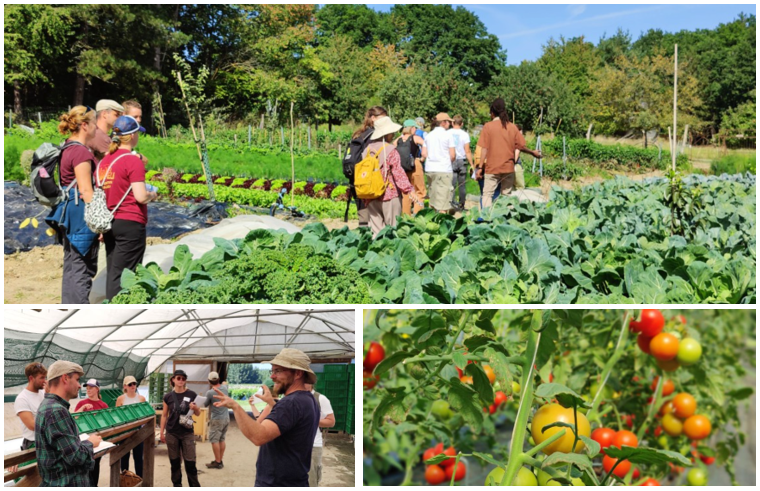
Credits: Lucas Lindelöf
Get on a tour to Small Ruminants Organic Dairy Production Cross Visit in Bulgaria, 9–11 July 2025
Watch the video to get insights and experiences from the visit:
Discover our short reports with lessons learnt from visits:
📝 Cross Visit about Organic Viticultural Systems in Italy, 25-27 March 2025

Credits: Luca Colombo
📝Cross Visit about Organic Cherry and Olive Production in Croatia, 6-8 May 2025

Credits: Urban Hrovatič

Credits: Martin Matěj
📝Cross Visit about Conversion to Organic Apple and Cherry in Switzerland, 13-14 August 2025

Credits: Lena Caminada
📝Cross Visit about Grass-Fed Organic Cattle Production in Estonia, 27-28 August 2025
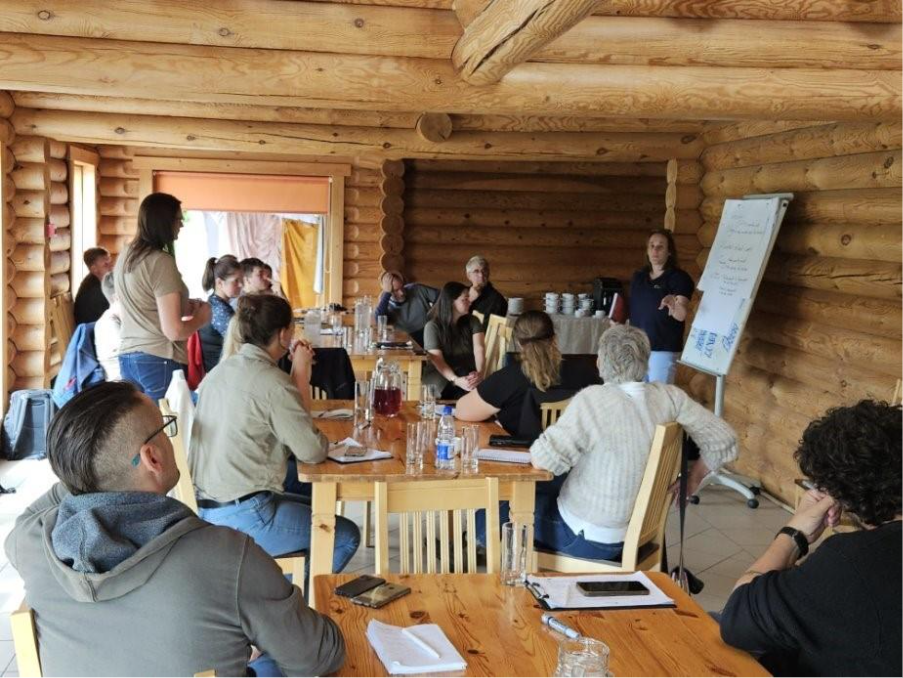
Credits: Merit Mikk
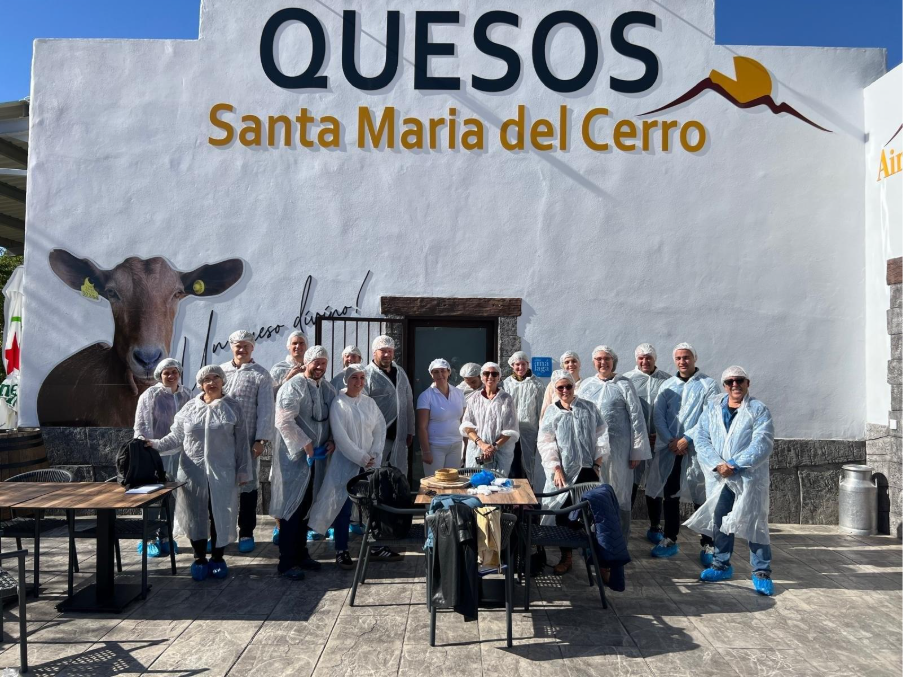
Credits: Anca Moga

Get updated about OrganicAdviceNetwork activities and subscribe to the newsletter:


.png)
OrganicAdviceNetwork is funded by the European Union (Grant no. 101134850) and by the Swiss State Secretariat for Education, Research and Innovation (Grant no. 23.0639, 101134850). Views and opinions expressed are however those of the author(s) only and do not necessarily reflect those of the European Union, European Research Executive Agency or Swiss State Secretariat for Education, Research and Innovation. Neither the European Union nor any other granting authority can be held responsible for them.
